
The 19th Century Moses
FREEDOM AND FAITH
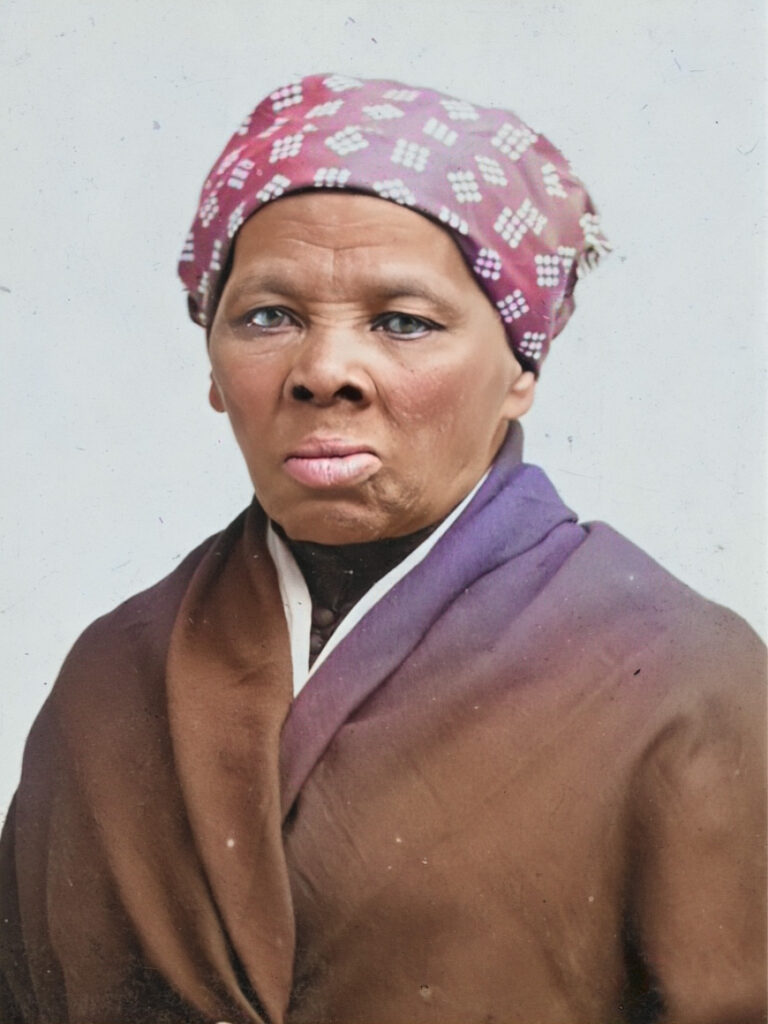
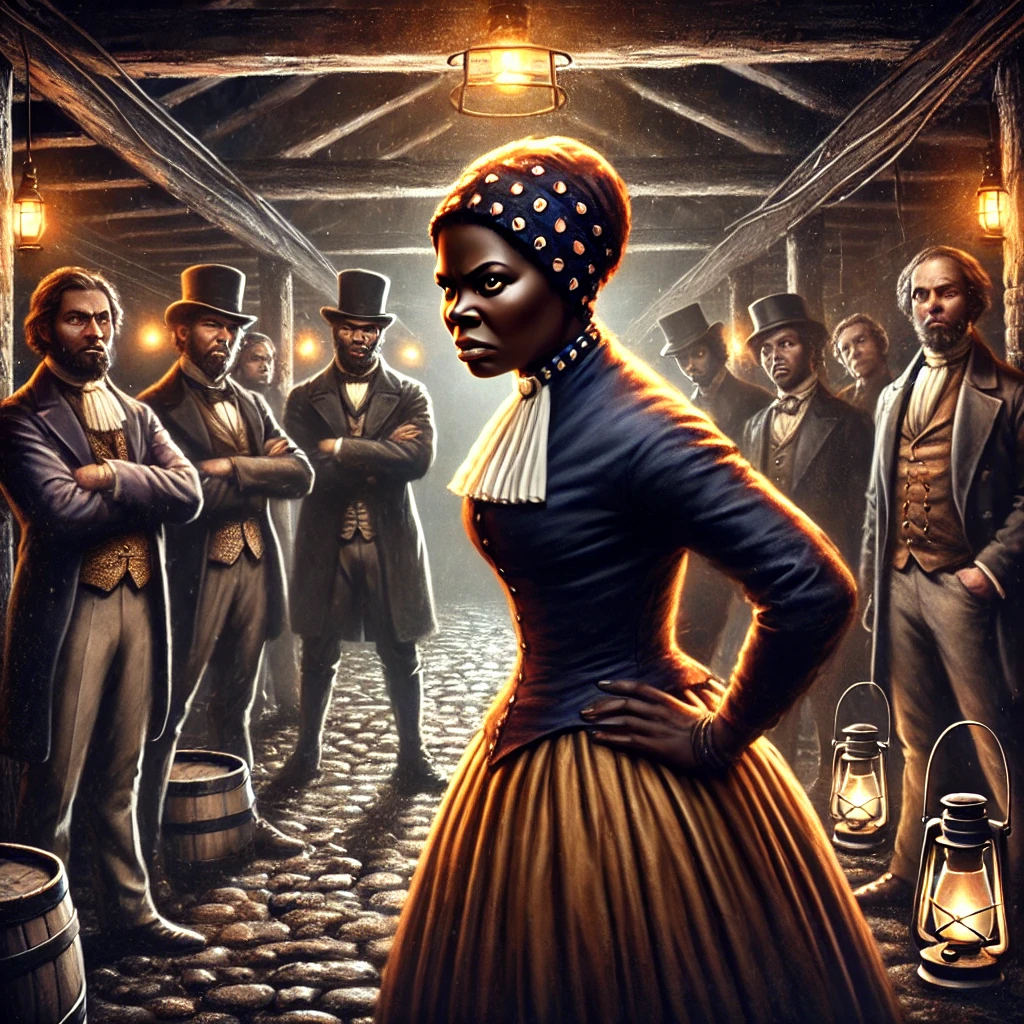
Harriet Tubman, born Araminta Ross around 1822 in Maryland, lived the first decades of her life in bondage. She endured the harsh realities of slavery—physical labor, abuse, and forced separation from loved ones. From a young age, she believed that God spoke to her through vivid visions and dreams. These spiritual experiences nurtured an unbreakable faith that would guide her every step, ultimately spurring her daring flight from slavery. In 1849, Harriet slipped away and traveled north, reaching Philadelphia in search of freedom. Yet, like many prophets before her, she felt a divine call to do more.
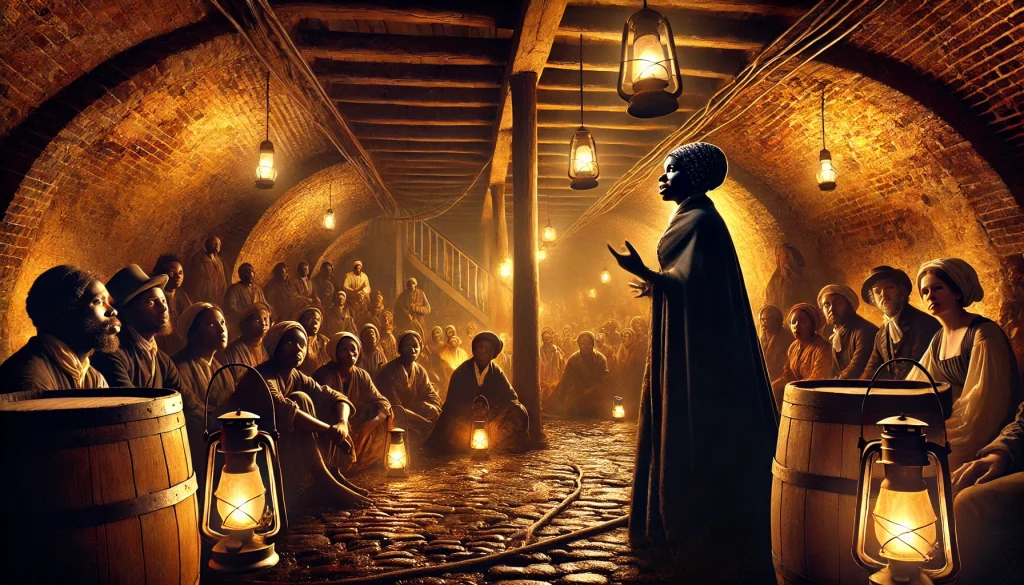
It was during this transitional period—after her arrival in the North and before her storied missions, to rescue dozens of enslaved individuals as a conductor on the Underground Railroad (and hundreds more later in life as a Union solider)—that Harriet may have spent time in Poughkeepsie, learning about the abolitionist movement at the progressive Collegiate School on College Hill. Established as a beacon of enlightenment and social justice, the school’s inclusive policies made it a sanctuary for forward-thinkers and abolitionists alike. Here, Harriet could have deepened her resolve to end slavery. Inspired by her faith, she may even have boldly declared herself the “Moses” of her people—just as Jesus openly proclaimed Himself as the Messiah when He stood in the synagogue. This conviction that she was chosen and guided by God explains her fearless leadership on the Underground Railroad and her unerring success in outwitting pursuers.
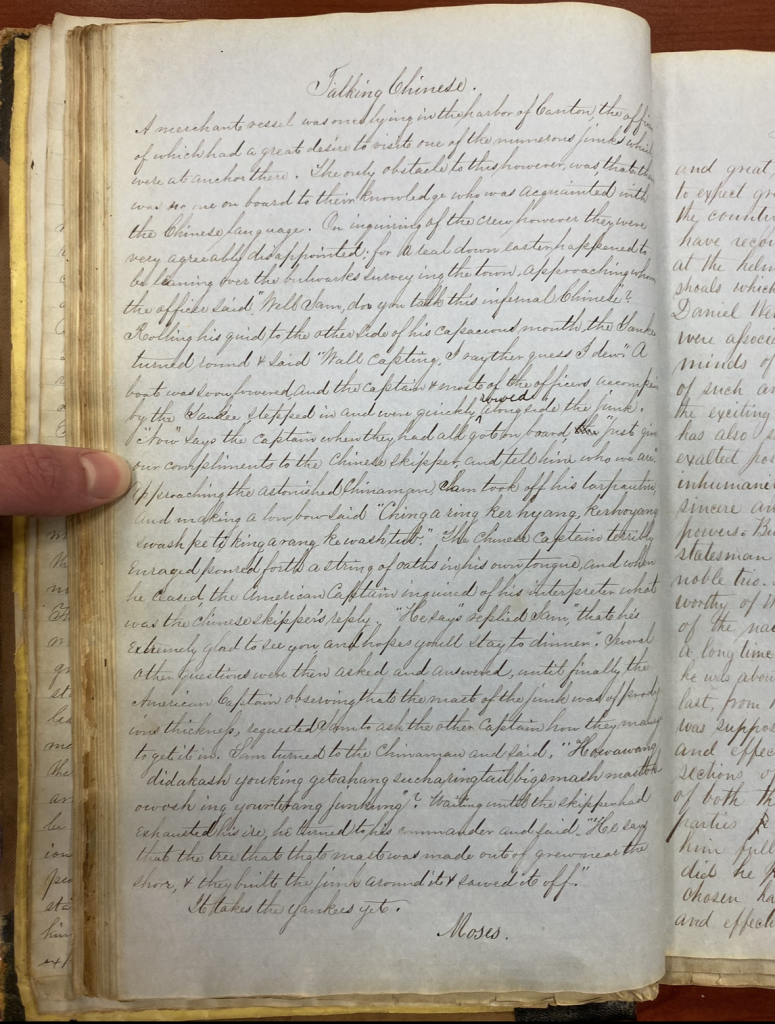
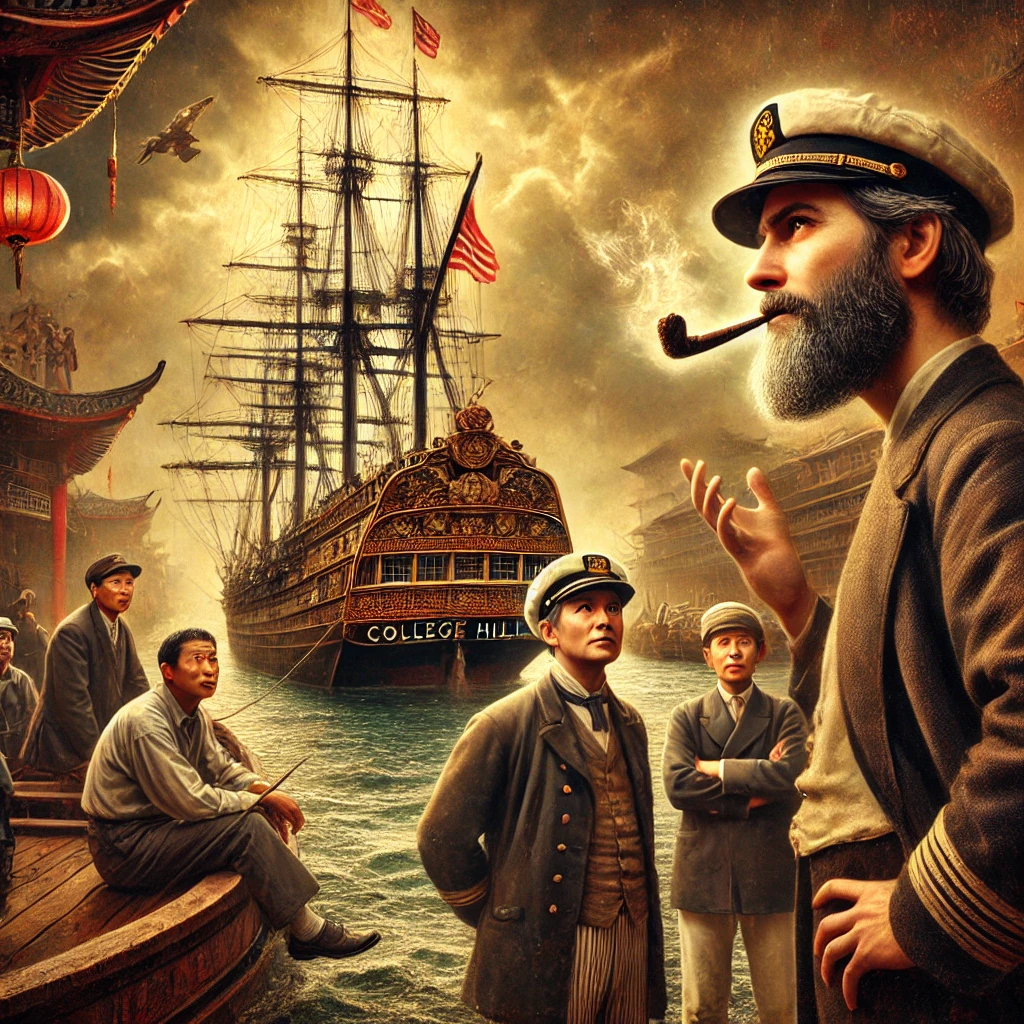
Among the surviving pages of the College Hill Mercury, two intriguing articles signed as “Moses” hint at Harriet’s potential dictation. One, titled “Talking Chinese,” employs coded language and envisions a puzzling future conflict with China, concluding with the cryptic phrase, “It takes the Yankee’s yet.” Some believe this may have sprung from a vision Harriet received, couched in allegory and brimming with the same tactical ingenuity that made her a legendary conductor on the Underground Railroad. The other, “Dandyism,” skewers vain men who indulge in shallow pursuits at the expense of truly noble causes—like the abolition of slavery. Although likely dictated to a man, its tone and perspective feel distinctly feminine, chastising those who distract themselves with petty vanities instead of committing themselves to the urgent struggle for freedom.
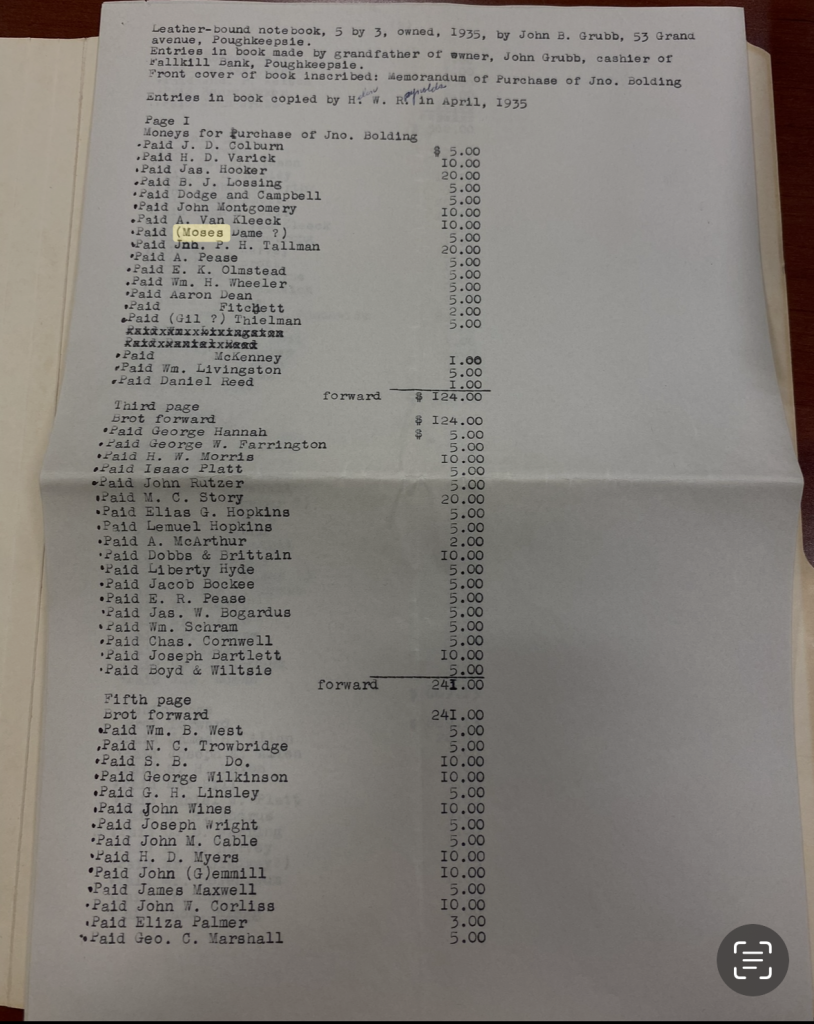
Finally, there is a tantalizing record listing “Moses Dame” among the donors contributing to buy a man named John Bolding back from slavery. “Dame” is a British title for a woman knighted in recognition of her service or bravery—an accolade befitting the extraordinary life of Harriet Tubman, whose heroism and knightly devotion to her people have cemented her legacy as one of history’s greatest freedom fighters. Taken together, these clues form a compelling argument that the same woman revered as “Moses” on the Underground Railroad was also “Moses” on that “Heaven-kissing Hill” in Poughkeepsie—called by God to deliver her people from bondage.
The Words of the 19th Century Moses
Talking Chinese.
A merchant vessel was once lying in the harbor of Canton, the officers of which had a great desire to visit one of the numerous junks which were at anchor there. The only obstacle to this, however, was that there was no one on board, to their knowledge, who was acquainted with the Chinese language. On inquiring of the crew, however, they were very agreeably disappointed; for a real down-easter happened to be leaning over the bulwarks, surveying the town. Approaching him, the officer said, “Well, Sam, do you talk this infernal Chinese?”
Rolling his quid to the other side of his capacious mouth, the Yankee turned round and said, “Wall, Capting, I rather guess I dew.” A boat was soon lowered, and the captain, plus most of the officers, accompanied by the Yankee, stepped in and were quickly alongside the junk.
“Now,” says the captain when they had all vowed to go on board, “just give our compliments to the Chinese skipper and tell him who we are.”
Approaching the astonished Chinaman, Sam took off his tarpaulin, and making a low bow, said, “Ching a ring ker hyang, kerhoyang swash peti king a rang ke washtub.” The Chinese captain, terribly enraged, poured forth a string of oaths in his own tongue, and when he ceased, the American captain inquired of his interpreter what the Chinese skipper’s reply was. “He says,” replied Sam, “that he’s extremely glad to see you and hopes you’ll stay to dinner.” Several other questions were then asked and answered, until finally, the American captain, observing that most of the junk was of prodigious thickness, requested Sam to ask the other captain how they managed to get it in. Sam turned to the Chinaman and said, “Hawawana did akash you king get akang such a ringtail big smash masto-owushing your terang junking?” Waiting until the skipper had exhausted his ire, he turned to his commander and said, “He says that the tree the mast was made out of ‘grew near the shore,’ and they built the junk around it + sawed it off.”
It takes the Yankee’s yet.
Moses.
Dandyism.
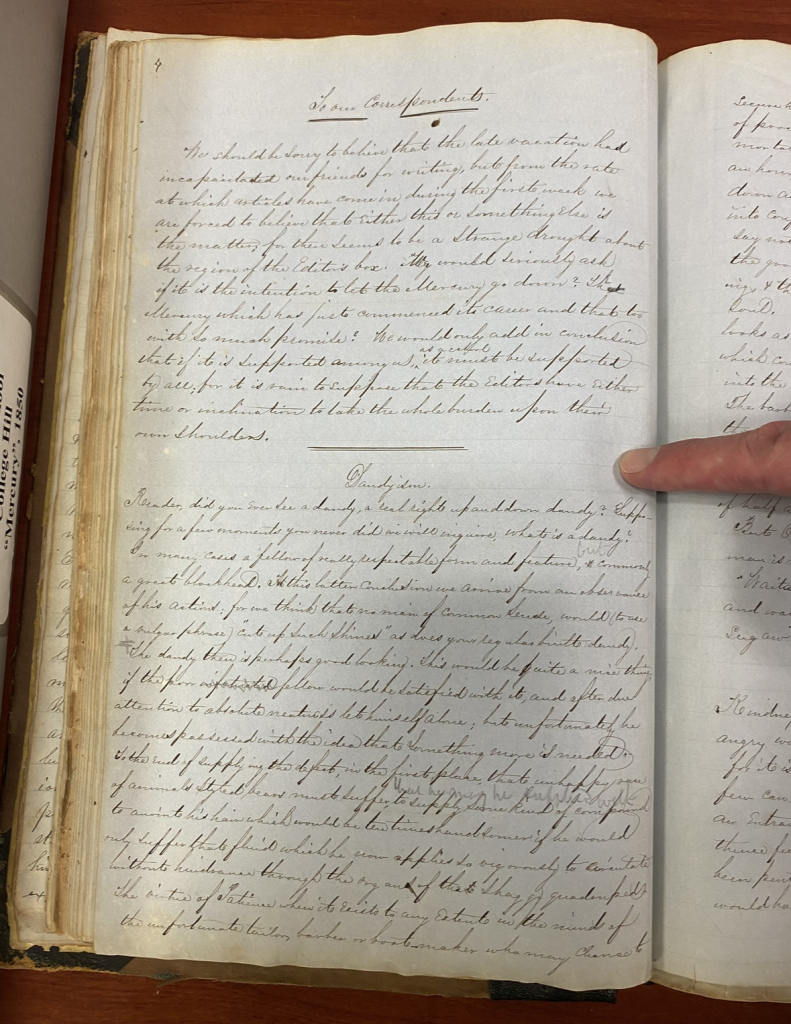
Reader, did you ever see a dandy, a real, right up-and-down dandy? Supposing for a few moments you never did, we will imagine: what is a dandy?
In many cases, a fellow of really respectable form and feature, but commonly a great blockhead. At this better conclusion, we arrive from an observance of his actions; for we think that no man of common sense would (to use a vulgar phrase) “cut up such shines” as does your regular-built dandy. The dandy then is perhaps good-looking. This would be quite a nice thing if the poor fellow would be satisfied with it, and after due attention to absolute neatness, let himself alone. But unfortunately, he becomes possessed with the idea that something more is needed. To the end of supplying the defect, in the first place, that unhappy reserve of animals styled bears must suffer to supply some kind of compound to anoint his hair, which would be ten times handsomer if he would only suffer that fluid which he now applies so vigorously to circulate without hindrance through the organ of the shaggy quadruped. The virtue of patience, when it exists to any extent in the minds of the unfortunate tailor, barber, or boot-maker who may chance to
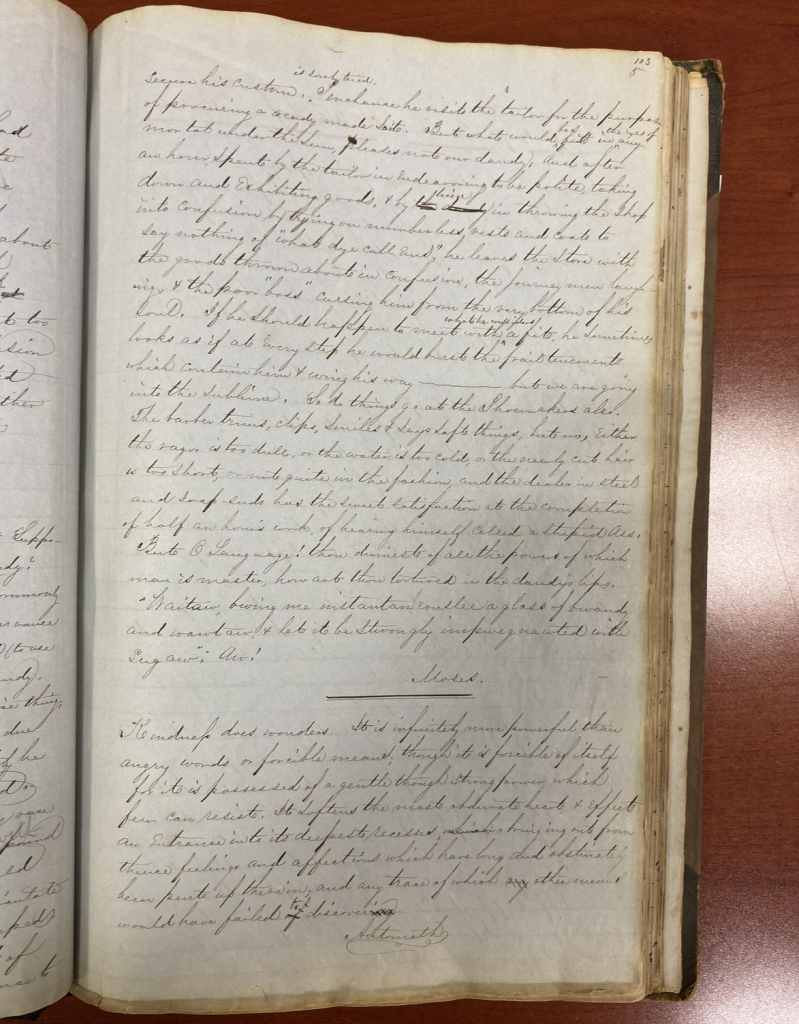
secure his custom, is sorely tried. Hence, he visits the tailor for the purpose of procuring a ready-made suit. But what would be first in the eyes of any mortal under the sun pleases not our dandy; and after an hour spent by the tailor in endeavoring to be polite, taking down and exhibiting goods, and by him in throwing the shop into confusion by trying on numberless vests and coats – to say nothing of “what d’ye call ‘em” – he leaves that store with the goods thrown about in confusion, the journeymen laughing, and the poor “boss” cursing him from the very bottom of his heart. If he should happen to meet with what he considers a fit, he sometimes looks as if at every step he would burst the frail tenements which contain him and wing his way… but we are going into the sublime. So do things go at the shoemaker’s also. The barber trims, clips, smiles, and says soft things, but no, either the razor is too dull, or the water is too cold, or the newly cut hair is too short, or not quite in the fashion, and the dealer in steel and soap-suds has the sweet satisfaction, at the completion of half an hour’s work, of hearing himself called a stupid ass.
But O long usage! Thou drainest of all the power of which man is master, how art thou tortured in the dandy’s lips. “Waiter, bring me instantaneously a glass of brandy and water, and let it be strongly impregnated with sugar!”: aw!
–Moses
© 2026 Michael J. Bentley. All rights reserved.
The College Hill Mercury project, including its transcription, commentary, annotations, interpretations, essays, website text, research, arrangement, and presentation, is the copyrighted work of Michael J. Bentley. No portion of this website, manuscript, or original scholarship may be copied, reproduced, distributed, republished, adapted, or used for commercial purposes without written permission, except as permitted by law.